
For more than a week, the cataract clinic on the "Aerial Health Silk Road" mission in Kyrgyzstan has barely stopped. Doctors from Fudan University Affiliated Eye & ENT Hospital and Shanghai HePing Eye Hospital have moved continuously between clinic and operating room, while outside the hospital building long queues of patients keep forming. As the days passed, one thought kept surfacing among the visiting surgeons: many of these patients, had they been seen in China, would have had a far better chance of recovering more useful vision.
Their reflections point to three differences that matter most for cataract outcomes — pre-operative workup, surgical technique, and the philosophy of when to operate. Each reveals how the integrated, protocol-driven approach that Chinese eye centers now treat as routine can change a life.
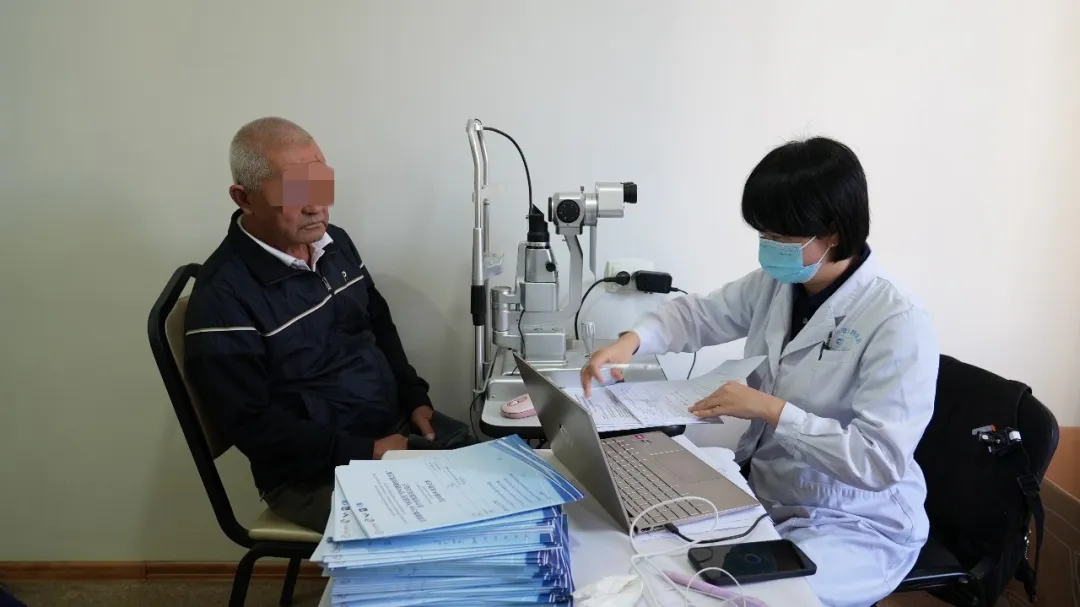
Crowds gather outside the host hospital each morning for the cataract mission — a visible reminder of how large the unmet need remains.
Pre-Operative Examination: The Foundation That Decides Everything
In China, a cataract operation almost never begins in the operating room. It begins in the diagnostic suite.
A standard pre-operative assessment chains together visual acuity, refraction, intraocular pressure, specular microscopy of the corneal endothelium, ocular B-scan ultrasonography, optical coherence tomography (OCT), visual field testing, and biometry for intraocular lens power calculation. Each step narrows the diagnosis: is this nuclear, cortical, or posterior subcapsular? What is the severity? Are there co-existing conditions such as glaucoma or macular disease that must be managed alongside?
At the mission site in Kyrgyzstan, the team could routinely perform only auto-refraction, basic vision testing, and tonometry. OCT and visual field analysis were far more limited. That gap in the diagnostic chain — not any single instrument — is what changes outcomes.
"Some patients present with very high intraocular pressure, and we need to know whether that is glaucoma or simply a one-time elevation," explains Dr. Xiang of Fudan University Affiliated Eye & ENT Hospital. "For that, we need OCT and visual field. If a patient also has a macular problem, we need fine retinal evaluation. In China, these patients typically complete a full work-up before surgery. We identify the cause earlier, and we know when and how to intervene."
The lesson is universal: the more complete the work-up, the more clearly the treatment plan can be drawn, and the greater the chance that useful vision can be preserved.
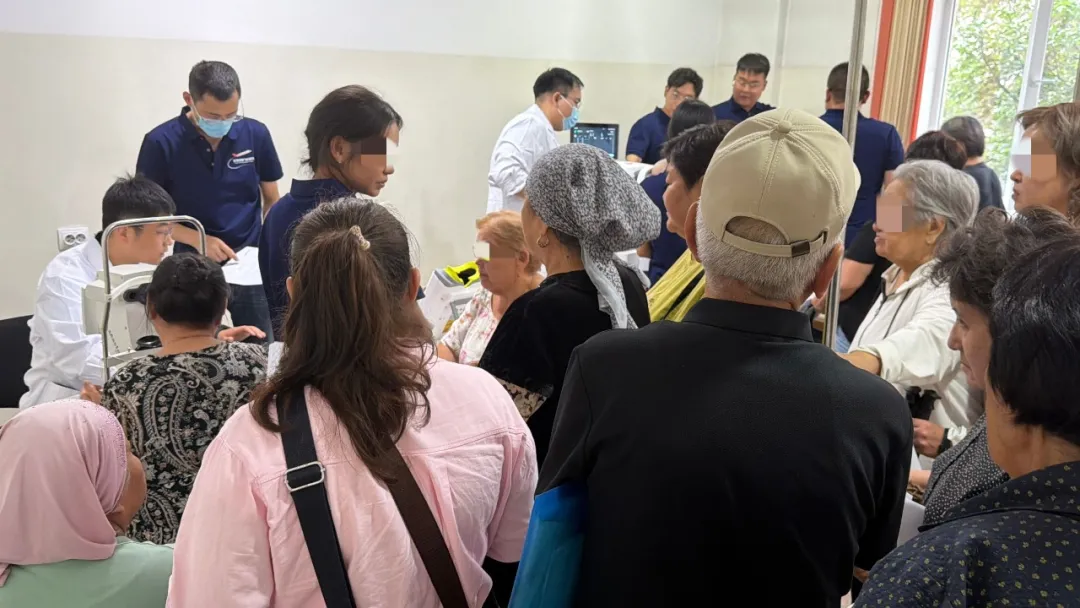
Slit-lamp examination is only one piece of a much longer diagnostic chain that drives surgical planning.
Phacoemulsification: Smaller Incision, Faster Recovery
The choice of surgical technique directly determines how well a patient can see after the operation.
In China, phacoemulsification — ultrasound-based fragmentation of the cloudy lens through a tiny incision — has long been the standard for cataract surgery. Because the incision is small and tissue trauma is minimal, most patients recover useful vision within days.
At the Kyrgyzstan site, the dominant procedure remains manual extracapsular cataract extraction (ECCE), and local surgeons may perform only two or three such cases per week. The Chinese team asked an equally important second question: why, when the local surgeons know phaco exists, do they not perform it?
"They know what phacoemulsification is," explains Dr. Ni Shuang of Shanghai HePing Eye Hospital. "The reason they do not do it is that the machine, the technique, and the teaching are all missing. To run phaco, you need all three."
That observation frames a less basic but essential insight: sustainable capacity-building is not a transfer of boxes, it is a transfer of equipment, technique, and training, side by side.
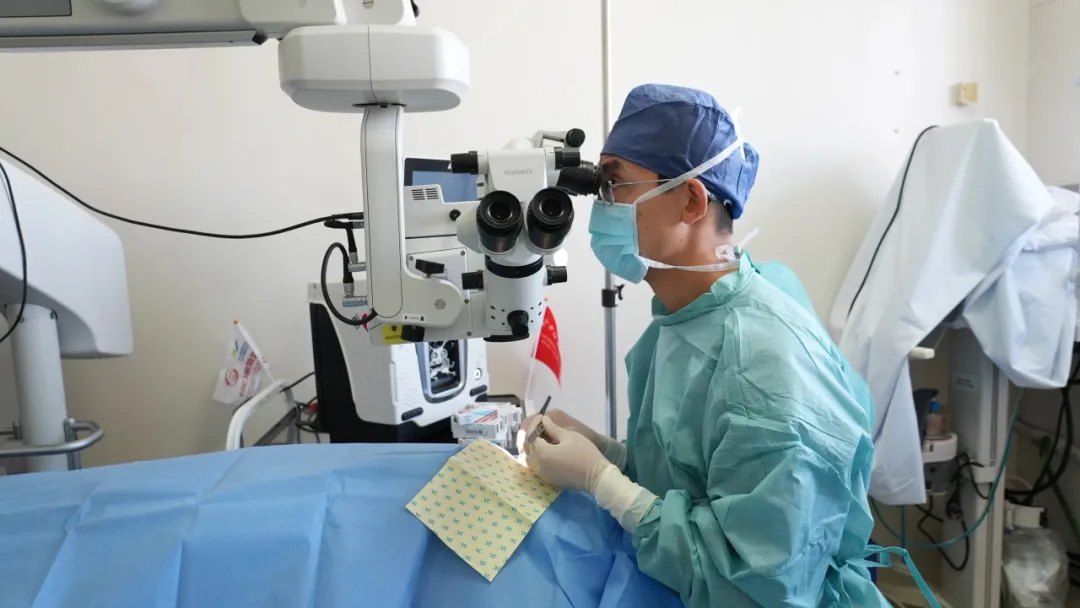
Phacoemulsification requires not only the machine but a trained surgeon and a complete peri-operative protocol.
Early Diagnosis, Early Surgery: Why Timing Matters
Different techniques reflect something more fundamental — about how each system thinks about timing.
In Kyrgyzstan, many patients still believe that cataract surgery is only justified once vision is almost completely gone. The Chinese team advocates a different view: once a cataract meaningfully affects daily life, surgery is reasonable. Operating earlier means smaller wounds, lower complication risk, and a better chance of excellent post-operative vision.
Dr. Xiang gives an example. One patient still measured 1.0 vision but had a very shallow anterior chamber — a known risk factor for acute angle-closure glaucoma. In China, that patient would usually be advised to proceed with cataract surgery soon: removing the lens both treats the cataract and substantially reduces the risk of a sudden, painful glaucoma attack. By the time vision suddenly drops and the eye becomes red and painful, the window for an excellent outcome may already have closed.
Another patient had previously undergone vitreoretinal surgery, with silicone oil left in place long-term, and had since developed a cataract. Because the retina beneath could not be adequately evaluated, white cataract surgery was temporarily contraindicated. In China, post-vitrectomy patients are followed on a structured schedule — silicone oil removal, retinal re-assessment, and then cataract surgery — so the sequence is never improvised.
A cataract operation that is unremarkable in one place can in another place represent a long-deferred grace of vision.
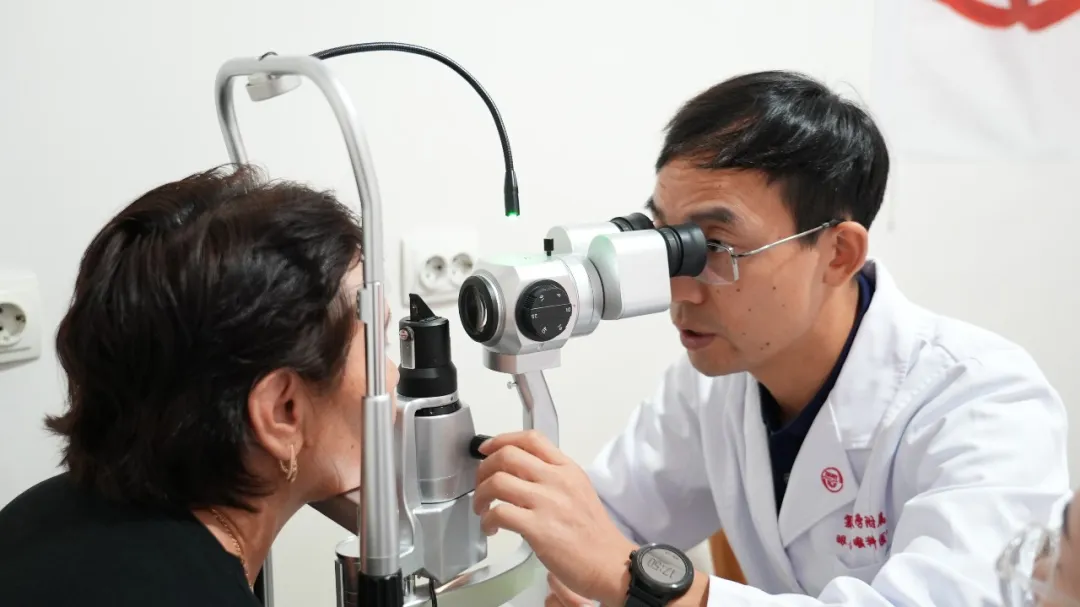
A steady stream of patients keeps the mission clinic operating at full capacity from morning to evening.
What the Mission Brings: A Complete Workflow
What Chinese ophthalmologists bring to Kyrgyzstan is not just a phaco machine, and not just a stack of cases. It is a complete way of thinking about cataract care — from pre-operative examination and diagnostic reasoning, to surgical technique and intra-operative decision-making, to post-operative review and long-term follow-up.
That system transforms "being able to see" into "being able to see clearly," "wait until it's unbearable" into "intervene early," and uncertain complex cases into manageable, predictable operations.
The "Aerial Health Silk Road" mission, in other words, is not a one-off charity gesture. Its purpose is to bring China's standardized eye-care protocols, surgical techniques, and full workflow management to local teams, so that eyes that might otherwise have been delayed, missed, or lost can recover the possibility of restored sight.
About Dr. Ni Shuang
Dr. Ni Shuang (倪双) is a cataract and anterior segment surgeon at Shanghai HePing Eye Hospital, a Shanghai University-affiliated eye specialty hospital. She is part of the surgical team that has carried out the "Aerial Health Silk Road" cataract mission in Kyrgyzstan alongside colleagues from Fudan University Affiliated Eye & ENT Hospital.
HePing Eye's cataract service combines phacoemulsification surgery, premium intraocular lens options such as multifocal and toric IOLs, and structured post-operative review to support international patients seeking world-class cataract care in Shanghai.